What Happens at a Countertop Templating Visit
The template is where your countertop is really designed, which is why a careful visit takes its time.
October 20, 2026 · 3 min read
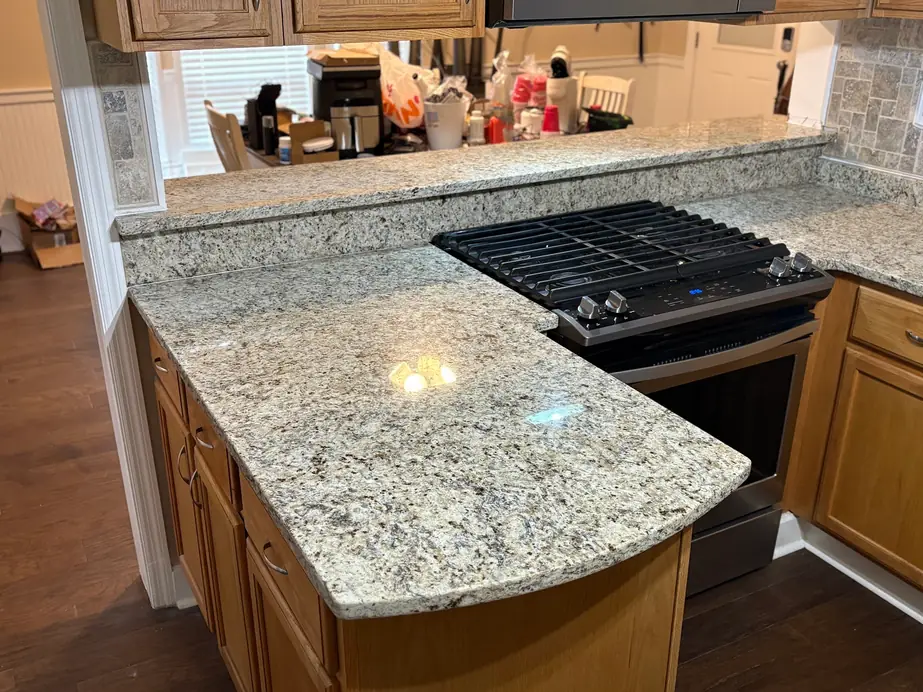
Why the template matters more than the cutting
A countertop is cut from a slab of stone that can't be trimmed on site, stretched, or patched with filler. If a measurement is off by a quarter of an inch, there's no shaving a little here and there the way you might with a board. The template is the full-size record of your room that the fabricator cuts from, and a thorough one is what produces a top that drops into place cleanly.
That's why a templating visit is slower than most people expect. The person measuring is making a lot of small decisions that will be locked into stone, and each one is easier to settle in your kitchen than back at the shop. You're allowed to ask questions throughout. If something about the plan looks wrong to you, the time to say so is while the template is still being made and nothing has been cut.
Getting ready before the visit
The cabinets need to be installed, level and fastened in place before templating, because the stone follows whatever is there. If a cabinet is going to move after the template is made, the top won't match. Have the sink, faucet and cooktop or range chosen too, since each one affects the cutouts. If you haven't picked the exact sink model yet, bring the spec sheet or the sink itself.
- Cabinets installed, level and secured to the wall.
- Sink chosen, or in hand, along with the faucet.
- Cooktop or slide-in range model decided.
- Slab selected and the general layout discussed.
- Counters cleared and the cabinet under the sink emptied.
What gets measured on site
Walls are rarely square, and floors and cabinet tops are rarely perfectly flat. The person templating checks each wall for straightness and notes where a corner is off, so the stone can be cut to meet it or a small gap can be planned for the caulk line. Depending on the shop, that record might be built from thin wood strips or captured digitally with a laser measuring tool.
The depth of each run, the height and extent of the backsplash, and the spots where the top ends against a wall or an appliance all get recorded. Anything that touches the stone matters: a window sill that sits close, an outlet that has to stay reachable, a dishwasher that needs room to slide in and out.
Cutouts, overhangs and edges
The sink and cooktop positions are marked exactly. For an undermount sink, the fabricator needs the real bowl dimensions and a plan for how it will hang from the underside of the stone. Faucet holes are placed to match the faucet you chose, and a spread that doesn't fit the stone is a headache better solved now than at install.
Overhangs get decided here as well. A modest overhang past the cabinet face is normal, but a deeper one for bar seating usually needs support underneath, such as brackets or corbels, and the template is the moment to plan for it. The edge profile you want, whether eased, beveled or rounded, is confirmed at the same time.
Where the seams go
If your layout is longer than a single slab or has an inside corner, a seam is part of the plan, and the template is where its location is set. Good seam placement keeps the joint over solid cabinet support and away from the narrow bridges of stone beside a sink or cooktop cutout, which are the most fragile spots. It also takes the pattern of the slab into account, so the veining can carry across the joint.
How it works at Raccoon
Raccoon Stone & Tile Works does its templating, fabrication and installation in house, so the shop that measures your kitchen is the same shop that cuts and sets your countertop. That arrangement means whoever has the template in hand can talk with the people cutting from it.
One Google reviewer wrote that the person who came to their house spent four hours making the template, and that when it came time to install, the fit was perfect. Four hours isn't a rule for every kitchen, but that's what careful measuring can look like when the layout has real detail in it.
If you want to talk through what your project will need before anyone comes out, call the shop at (478) 956-2222, or visit the stone yard on GA-247 Connector in Byron during weekday hours.
Raccoon Stone & Tile Works, (478) 956-2222
Call (478) 956-2222More articles
Why You Should Pick the Full Slab, Not a Sample Square
A small sample tells you the name of the stone; the full slab tells you what your countertop will actually look like.
Granite, Quartz, Quartzite or Marble: Choosing a Kitchen Countertop
Each material asks something different of you, and the right one depends on how your kitchen actually gets used.