Granite, Quartz, Quartzite or Marble: Choosing a Kitchen Countertop
Each material asks something different of you, and the right one depends on how your kitchen actually gets used.
October 20, 2026 · 4 min read
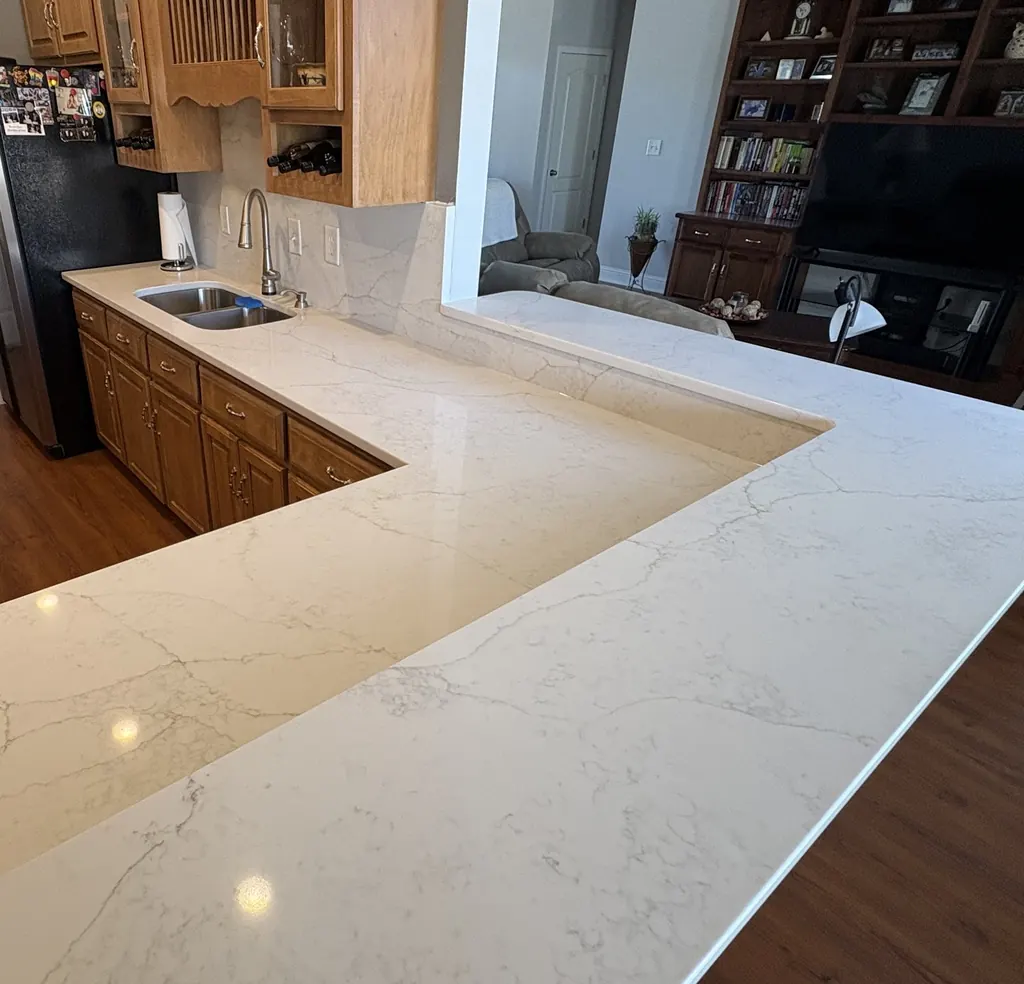
Start with how you use the kitchen
Before you fall for a colour, think about daily wear. Do you cook with a lot of tomatoes, citrus and wine? Do you set hot pans straight onto the counter? Is the kitchen a busy family hub, or a quiet space that mostly sees coffee and toast? Your answers push you toward one material or away from another, and it's much easier to decide on that basis than to live with a regret later.
Granite: tough and heat tolerant
Granite is a natural igneous stone made mostly of quartz and feldspar. It ranks high on the hardness scale, so knives and everyday use rarely scratch it, and it handles heat well. A trivet under a pot straight off the burner is still a good habit, but granite forgives more than most surfaces.
How porous granite is varies from one stone to the next. Dense, darker types often absorb very little, while lighter and coarser types can take up oil and water more readily. Most granite is sealed after installation and resealed now and then. A simple check is to put a few drops of water on the surface: if it darkens and soaks in, the stone wants sealing, and if it beads up, the sealer is doing its job.
Quartz: engineered and low maintenance
Quartz countertops are manufactured from ground quartz bound together with resin and pigment. That makes the surface nonporous, so it doesn't need sealing, and it makes the pattern consistent from slab to slab, which helps if you want an even look across a big kitchen.
The resin is the soft spot. Very hot cookware can scorch or mark it, so use trivets every time. Some quartz can also discolour under long exposure to strong direct sunlight, which is worth asking about before you put it beside a large sunny window or on an outdoor bar.
Quartzite: natural stone with extra hardness
Quartzite forms when sandstone is changed by heat and pressure into a tightly bonded mass of quartz. It's generally harder than granite, and it often has soft, flowing veining, which is why people choose it when they want a marble look without marble's softness. Because it's natural stone it usually wants sealing, and it varies a good deal from one type to another.
One caution: the word quartzite gets used loosely in the stone business, and a few softer stones are sold under that name. Ask how the specific slab holds up to scratching and to acid. A fabricator who works with the stone every day can tell you, and a small test on a sample piece answers a lot.
Marble: beautiful and softer
Marble is calcium carbonate, which reacts with acid. Lemon juice, vinegar, tomato sauce and wine can leave dull spots called etching on a polished surface. Marble is also softer than granite or quartzite, so it picks up scratches and wear over the years. Plenty of people love the way it ages into a patina, and bakers have long liked marble for working dough.
If you want marble, a honed (matte) finish hides etching better than a polished one. Go in expecting the surface to change with use, and you'll enjoy it for what it is. If you want a surface that looks the same in ten years as the day it was installed, one of the other three is the better fit.
Matching material to the way you live
No one of these is best for everybody. Here is a quick way to sort them by temperament.
- Quartz suits a household that wants no sealing and a steady, even pattern.
- Granite suits a household that likes natural variation and a durable, heat-tolerant surface, and doesn't mind sealing from time to time.
- Quartzite suits someone who wants natural veining and extra hardness, with the same sealing habit as granite.
- Marble suits someone who treasures the classic look and is comfortable with etching and a surface that changes.
Choosing at the Raccoon yard
Raccoon Stone & Tile Works fabricates and installs kitchen countertops in granite, quartz, quartzite and marble, and keeps full slabs at its yard in Byron so you can compare what's on hand side by side. Looking at real slabs settles most of the questions above faster than reading about them does.
If you can't decide, talk it through with Connie, who helped a customer choose material and pattern according to a 2025 review. Bring your cabinet and floor samples and tell her how you cook. That conversation is the best guide to which stone belongs in your kitchen.
Call (478) 956-2222, or stop by 2347 GA-247 Connector in Byron on a weekday to talk through your kitchen with the family that runs the shop.
Raccoon Stone & Tile Works, (478) 956-2222
Call (478) 956-2222More articles
Why You Should Pick the Full Slab, Not a Sample Square
A small sample tells you the name of the stone; the full slab tells you what your countertop will actually look like.
What Happens at a Countertop Templating Visit
The template is where your countertop is really designed, which is why a careful visit takes its time.